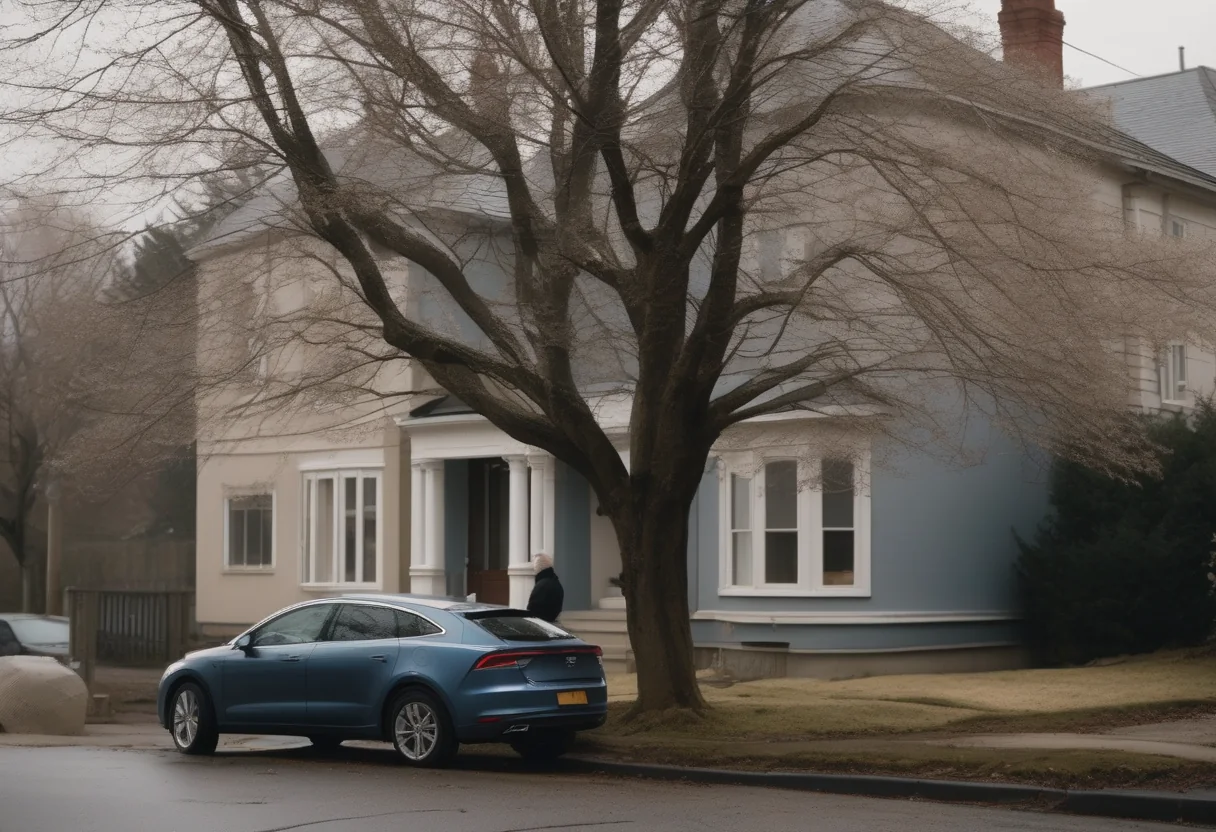
Suppose the main road is torn up, so you start taking the same side street to get coffee. On Monday a blue hatchback sits under the sycamore at the corner. Tuesday it is there again, with a paper cup on the dash. Wednesday the cup is gone and a jacket has appeared in the back seat. By Thursday you are no longer seeing a parked car. You are seeing a sequence, and sequences want a plot.
Nothing in that scene has to be sinister. I am using it as a hypothetical, the ordinary kind of repeat a person can notice without any special training. An earlier note, "The Quiet Skill No One Teaches," was about learning to see the small thing. This one starts after that, at the less flattering question: now that you have noticed it, what are you allowed to conclude?
Start with the part that can actually be checked. Three mornings. Same corner. Same color of car, as far as you could tell from the sidewalk. Two changes inside the cabin. You did not write down the plate. You did not check whether the car was there on the mornings you stayed home. You did not count the other cars that also occupied that curb. The observed facts are smaller than the feeling they produced. That gap is where most of the trouble lives.
The first explanation that deserves a fair hearing is that nothing unusual is happening. People park in legal spots near where they need to be. A cup and a jacket are what a car looks like when someone uses it. If you had walked that street for a month before the road work, you might have seen the same hatchback a dozen times and never filed it as an event. Repetition is not evidence of intent. It is often just a life intersecting a route you only recently started taking.
The second explanation is about you, not the car. Once a repeat snags your attention, you start looking for the next instance. The mornings the car is absent become easy to forget, because an absence does not confirm the story you have started to tell. The silver wagon two doors down can repeat just as often and never earn a theory, because you did not recruit it. Selective attention can manufacture a pattern out of a world that is already full of repeats. The test is not whether you can find another example. You usually can. The test is whether you went looking for the cases that would weaken it.
There is also a plain arithmetic version of the first explanation, and it is worth saying out loud. A side street has a limited number of legal spots. If the same people need to be near that corner on weekday mornings, some cars will repeat even when nobody is performing a pattern for you. Three hits feels like a message because you are counting the hits and not the opportunities. Ten cars, five mornings, and a street you only started using this week can produce repeats. That is not a mystical correction. It is just the size of the scene you forgot to measure.
The third explanation is that there is a real cause, and that the cause can still be ordinary. Someone may work a shift that ends when you walk by. Someone may leave the car while they walk the last block to a school or a job. A real cause is not the same thing as a cause that is about you. This is the explanation people skip, because ordinary feels like a disappointment after the mind has already spent three days building a plot. Ordinary is allowed to be true. A pattern can be genuine and still have nothing to ask of you.
What would change the conclusion is not a stronger feeling on Thursday. Feeling is what got you here. A plate number, written down, would tell you whether it is even the same car. A morning you did not walk that street, checked another way, would tell you whether the car tracks your route or its own. A person getting out with a lunch bag and a lanyard would not prove a biography, but it would move the cause from aimed at you toward someone else's Tuesday. If none of those checks are available, the honest status is not mystery. It is unfinished. Unfinished is a respectable place to leave a parked car.
The consequence shows up in places that matter more than a side street. A metric that moves the same direction three weeks in a row. A phrase a colleague uses in two meetings. A light in a neighbor's window. The mind is good at promotion: it takes a repeat and offers you a story in which you are either the detective or the subject. Both roles feel like clarity. Both can be a way of not doing the next, duller piece of looking.
So here is the question I would actually use, the next time a pattern seems obvious. If this explanation were true, what is one thing I should already be able to check, and have I checked it?
If the answer is no, the pattern can stay a pattern. It does not have to become a plot before breakfast.
Stay curious.